Accountability isn’t punishment for failure. It’s a structure that makes success harder to avoid — one people run toward instead of hide from.
By Freddie Scott II
Founder, Unlock The Champion
Same roster, same facility — the difference was a structure people could run toward
Accountability is the most weaponized word in leadership.
Most leaders use it the way a referee uses a whistle — to call out, to penalize, to make someone feel watched. That isn’t accountability. That’s shame in a tie.
Real accountability sounds different. It catches the leak before it becomes a fall. It reads the signal underneath the stats. In the next 4 minutes, you’ll see the 5 questions that separate the leaders people grow under from the ones they survive.
What accountability-as-punishment does to a room
I’ve watched the punishment model poison a locker room. Every failure public. Every correction punitive. Miss a rep, run extra. Lose your assignment on film, your name goes on the board. It “works” the way fear works — it produces compliance and short-term output, then long-term collapse.
Here’s the pattern, every time: players stop taking risks. Nobody speaks up in film sessions, because naming a mistake means volunteering for punishment. Veterans stop mentoring rookies because they don’t want to be associated with failure. The talent is still in the building — but the trust that lets talent perform is gone. And the results follow the culture down.
I’ve also seen the opposite: the same kind of roster, rebuilt with a different system. Same people, same facility, completely different result. The difference wasn’t talent. It was a structure people could run toward instead of hide from.
“
Accountability isn’t a person keeping score. It’s a triangle: Structure, Support, Self-Awareness.
The Founder's Desk · Freddie Scott II
The Accountability Triangle
Across years of working with teams, leaders, and high-performers, I’ve distilled effective accountability into three components. Most people only have one — and one leg of a triangle isn’t a triangle. It’s a stick. And sticks break.
StructureSupportSelf-Awareness
Structure (systems). Accountability without a system is just good intentions. You need visible structures: a weekly review, a tracking mechanism, commitments written down and time-stamped — not floating in your head where they get quietly revised every time you fall short.
Support (people). At least one person who knows your real goals — not the polished version — and can say “that’s not what you told me last week” without it landing as an attack. Support isn’t cheerleading. It’s committed truth-telling inside a relationship of genuine care.
Self-awareness (honesty). The one everyone skips. The best system and the best partner won’t matter if you can’t be honest with yourself about what’s really happening — like admitting the reason you didn’t follow through wasn’t that you were busy, but that you’re afraid of what happens if you actually succeed.
Why your accountability partner isn’t working
You’ve probably tried the accountability-partner thing. It lasted a month, maybe six weeks. Then the texts got shorter, the check-ins got rescheduled, and you both quietly agreed to pretend it never happened. That’s not a willpower failure. It’s a design flaw.
Most partnerships fail because they’re built on obligation instead of alignment — you paired with whoever was available, not someone who shares your values and has the courage to challenge you when it costs them comfort. The right partner isn’t the nicest person. It’s the one who respects you enough to be honest, and whom you respect enough to actually listen to.
4 questions to ask your accountability partner
If you have an accountability relationship — or you’re about to build one — these four questions decide whether it thrives or dies within a month:
“What permission do I have to speak into your life?” Define the boundaries up front. Some people want feedback on everything; others want it strictly professional. Skip this and you’ll either overstep or under-serve.
“How do you want me to respond when you don’t follow through?” The question nobody asks, and the most important one. Some need a direct challenge; others need a question. Get it wrong and your partner starts avoiding you.
“What’s the thing you’re most likely to lie about?” Harsh? Maybe. Necessary? Yes. Everyone has a blind spot where self-deception lives. Name it out loud and it loses half its power.
“What does winning actually look like in 90 days?” Vague accountability produces vague results. You need a concrete, personally meaningful target to anchor the whole relationship.
A note from Freddie
“For years I treated accountability as something done to me — a coach watching film, someone keeping score. The breakthrough was realizing it’s not something you get. It’s something you become. Build the triangle, and you stop needing someone to hold you accountable. You hold yourself — with clarity, not shame.”
Freddie Scott IIFormer NFL pro · NFL Certified Transition Coach · Founder, Unlock The Champion · Author of Made for More
The shift that changes everything
For years I treated accountability as something external — done to me. A coach watching film. Someone keeping score. The breakthrough was realizing accountability isn’t something you get. It’s something you become.
When it becomes part of your identity — when you’re the kind of person who tells the truth when nobody’s checking, reviews the tape when nobody’s watching, keeps the commitment when the deadline disappears — you stop needing someone to hold you accountable. You hold yourself. Not with shame. Not with punishment. With clarity.
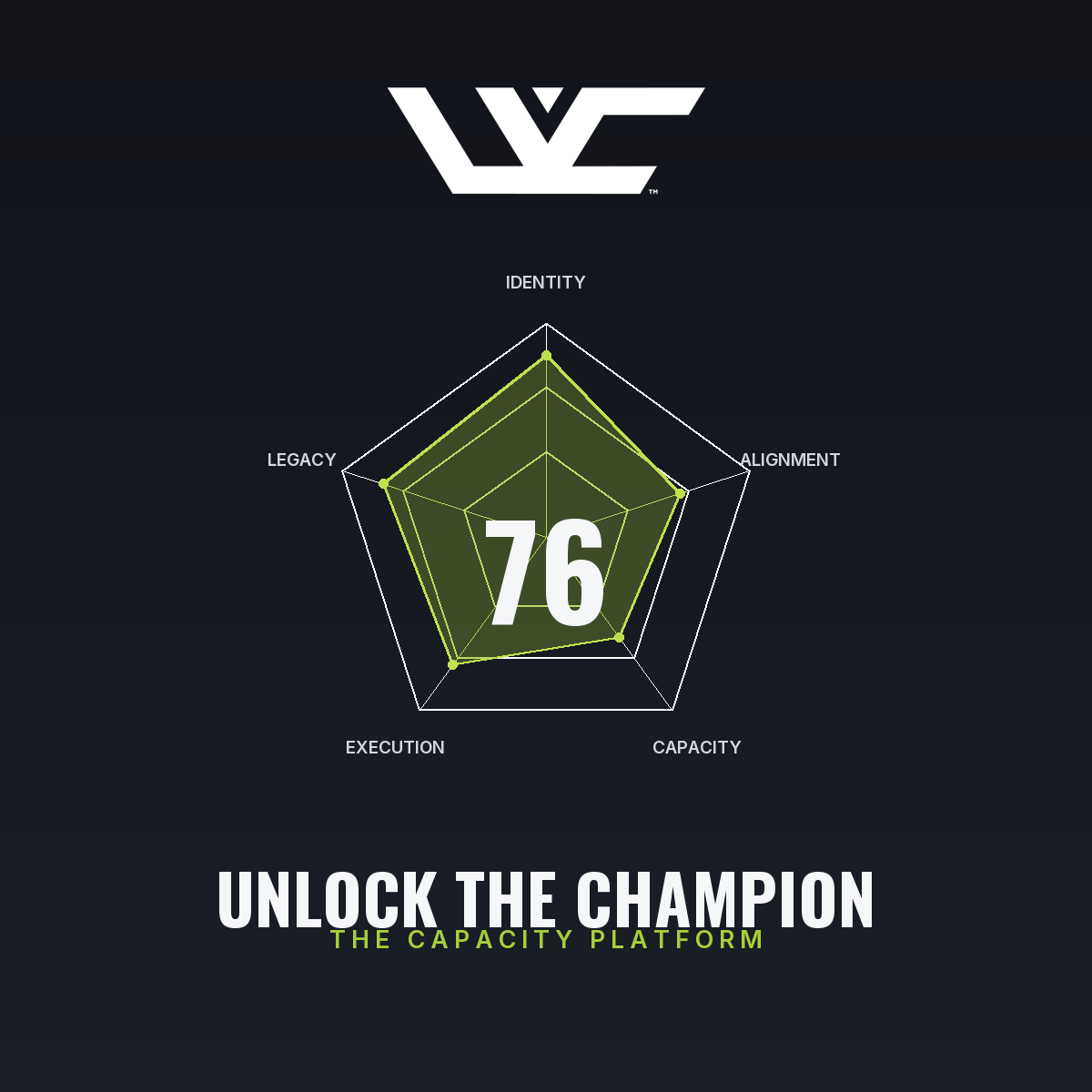
That’s the difference between accountability culture and shame culture. Shame says, “You failed and you should feel terrible.” Accountability says, “You missed the mark — now let’s find out why, adjust the system, and go again.” One hurts capacity. The other builds it. The Capacity Read shows you where your accountability is strong and where it’s quietly leaking.
“
Accountability isn’t something you get. It’s something you become.
Bigger than the moment
Your move
You don’t build accountability by trying harder — you build it by design. The free Capacity Read pinpoints the gaps in your structure, support, and self-awareness — so you can build accountability that holds. Start with your own Execution. Then bring it to the room you lead.
Accountability without shame is a culture you build on purpose. See where your team stands with a team capacity assessment, or model the practice yourself through The Pride.
The Pride is every leader, coach, athlete and builder who chose clarity over shame — who decided the people they lead are bigger than the moment. If this said something true, pass it on. Someone building a room right now needs to read it before the culture follows the scoreboard down.