You don’t need to quit your job to find purpose.
That’s the lie the self-help industry sold you: you’re unfulfilled because you’re in the wrong career, so torch it, follow your passion, and leap — the net will appear. Except for most people the net doesn’t appear. What appears is a credit-card bill, a confused family, and the same emptiness in a different zip code.
What you actually need isn’t a new job. It’s to bring purpose to your work. Those are two fundamentally different things.
The pattern I see every month: a senior leader, fifteen years in, successful by every external metric — and quietly ready to resign. Not because the company is toxic, but because the meaning is gone. “I’m successful but I’m not significant.”
That’s not a job problem. It’s an alignment problem. And alignment can be rebuilt without a resignation letter.
The Purpose Alignment Model
Purpose isn’t a destination — it’s an alignment you can find, or lose, in any role at any company. It lives where three circles overlap:
1. Your skills. What are you genuinely excellent at — not what’s on your job description, but the capabilities so natural to you that you forget other people find them hard?
2. Your values. What matters at a bone-deep level — not the vision-board version, but the non-negotiables that make your stomach turn when they’re violated?
3. Your impact. Where does your work actually touch other people’s lives? Not the company’s impact statement — yours. The specific difference you make for the people your work serves.
When all three overlap, you’re not just working — you’re building, and even the fatigue is the good kind. When any circle is missing, the emptiness creeps in, no matter how good the paycheck is. More often than not, the missing circle is impact: brilliant skills, partly-honored values, and no clear line of sight between the daily work and a real human life. You’re moving freight, not moving people.
3 purpose pivots you can make this week
You don’t need a sabbatical. You need clarity and three intentional moves:
The story pivot — rewrite your role in terms of impact. Reframe your job around who it serves. “I manage supply-chain operations” becomes “I make sure thousands of families get what they need, when they need it, without disruption.” Same job, different narrative — and the story you tell yourself shapes how you experience the work.
The skill pivot — volunteer your highest gift in a new context. Find one place your best skill is underused and offer it. Mentoring a few early-career colleagues isn’t in the job description and isn’t compensated — but connecting your values (developing people) to your skills can electrify a whole week. Purpose often lives in the 10% you volunteer, not the 90% that’s assigned.
The impact pivot — get closer to the humans your work touches. Most leaders are insulated from their impact by layers of abstraction. Break through them: visit the end user, read the customer feedback, talk to the person on the floor. When you see the face your work serves, purpose stops being theoretical and becomes visceral.
Why “follow your passion” is dangerous advice
The “follow your passion” narrative has wrecked more careers than bad management. Passion is an emotion, and emotions fluctuate — build a career on passion alone and you’ll abandon ship every time the feeling fades, which it will in every job, including the one you think is your calling.
Purpose is different. Purpose is a commitment — a decision to bring meaning to what you do regardless of how you feel on a given Tuesday. It survives the boring meetings and the difficult quarters. The most fulfilled leaders I work with don’t love every part of their job; they’ve simply built a clear connection between their daily work and something they believe matters, and that connection carries them through the parts that aren’t glamorous.
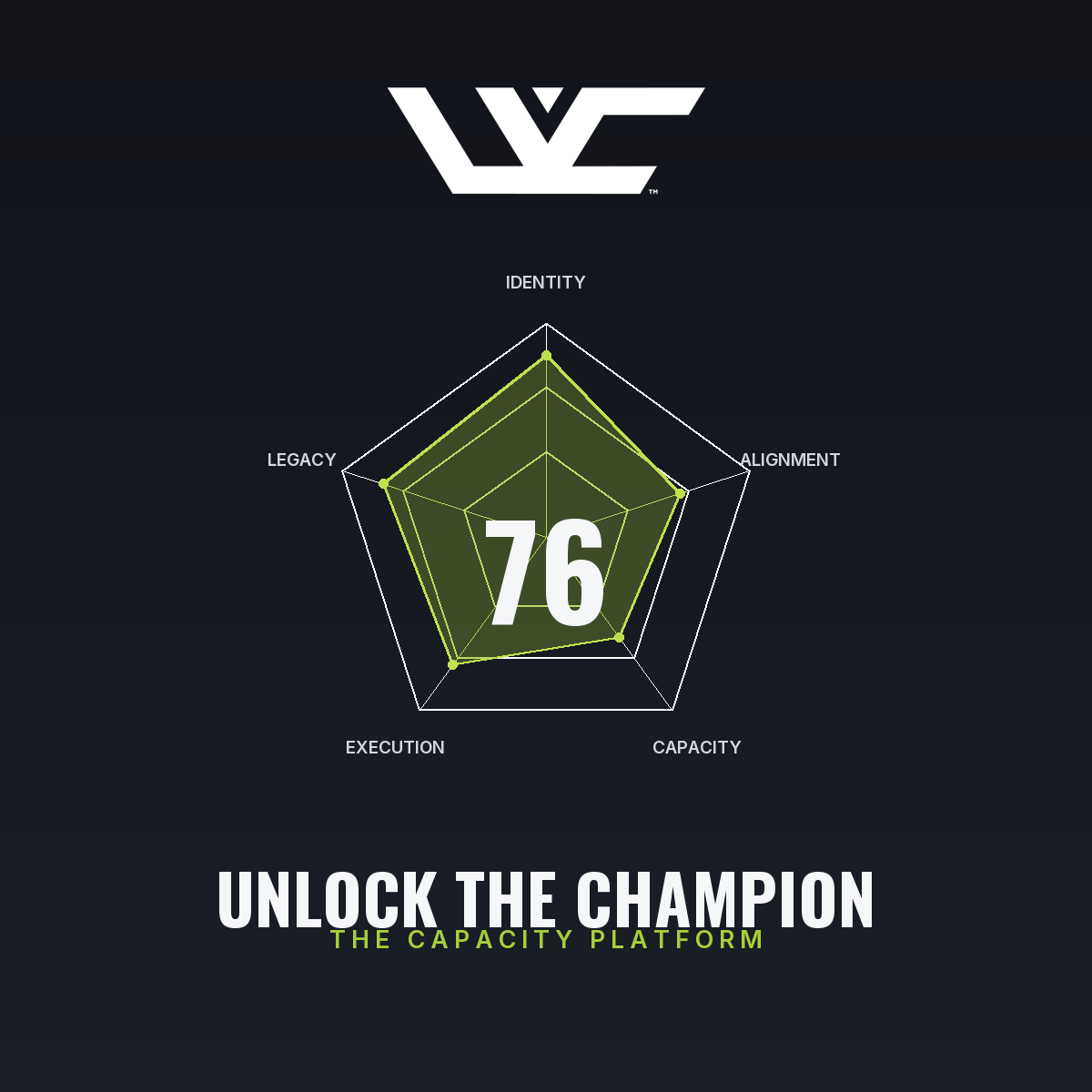
Not every job will be your calling. But every job can build your capacity if you approach it with intention. The Capacity Read shows you where your sense of purpose and contribution stands, and what it takes to bring alignment to the work you already have. You don’t need to burn it down. You need to light it up from the inside.